
Different Bill. Same Pattern. Why Bill 22 Should Concern Every Albertan.

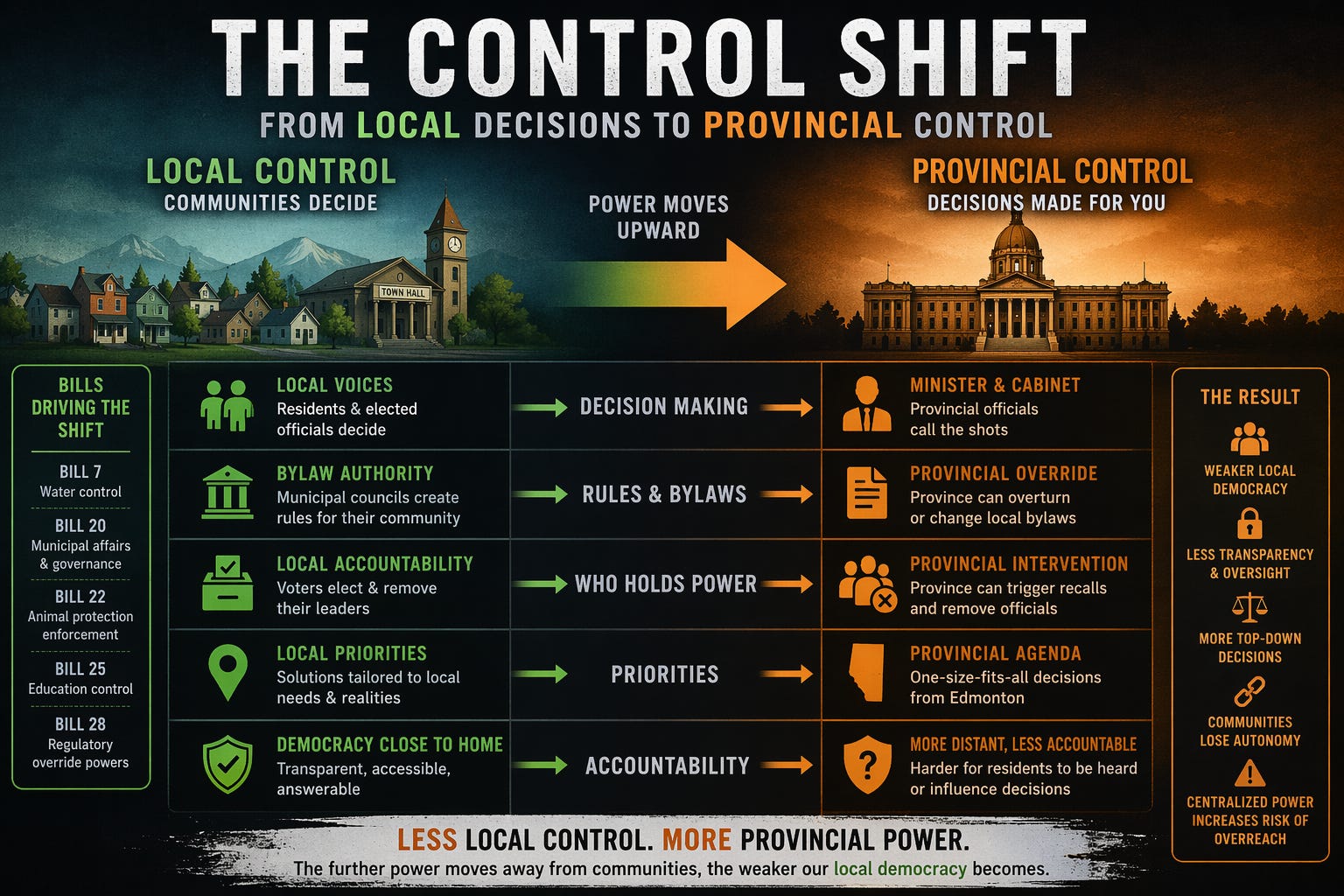
The Headline vs. The Reality
Alberta’s new Bill 22 Animal Protection Amendment Act, 2026 was introduced with language that sounds reassuring:
expand protections for animals, modernize inspections, strengthen enforcement, and increase penalties
Who could argue with that? Nobody wants animals mistreated. Nobody wants neglect or cruelty.
But here’s the problem…
That’s not where the real story is.
The Pattern We Keep Missing
If you’ve been following what’s happening across Alberta legislation, you’ll recognize this immediately.
It’s the same pattern we’ve seen before:
Bill 7 (water powers)
Bill 25 (education control)
Bill 28 (ministerial authority over materials)
Bill 20, the Municipal Affairs Statutes Amendment Act, gives the provincial cabinet the power to fire mayors and municipal councillors and overturn bylaws.
Now Bill 22.
Different topic. Same structure.
What Bill 22 Actually Does
Let’s strip away the messaging and look at the mechanics.
1. “Modernized inspections”
This doesn’t mean better efficiency.
It means:
Expanded authority to enter property
Broader discretion for inspectors
Lower threshold for intervention
Translation: More access. Less resistance.
2. “Expanded enforcement tools”
This is where things shift.
These tools typically include:
Orders issued without court involvement
Seizure powers
Compliance timelines dictated by regulators
Translation: Decisions move from courts to administrators
3. Increased penalties
Sounds like accountability.
But in practice:
Higher fines discourage challenge
Pressure increases to comply immediately
Appeals become financially risky
Translation: Enforcement becomes leverage
4. Undefined language
This is the part most people miss. Terms like:
“distress”
“adequate care”
“reasonable standards”
…are rarely clearly defined in legislation.
Translation: The law doesn’t decide … interpretation does
but why doesn’t everyone see this
Well I think one of the biggest divides shaping support for Bill 22 isn’t political, it’s geographical. In urban centres, where most people are several steps removed from agriculture, animal protection is often viewed through the lens of welfare, rescue, and prevention of cruelty. That perspective naturally supports stronger oversight and enforcement. But in rural Alberta, where animals are part of daily life, livelihoods, and food systems, the same legislation can feel very different. Here, expanded inspection powers and vague standards aren’t abstract, they carry real implications for property rights, operational control, and the risk of intervention by officials who may not fully understand the realities on the ground. What looks like “protection” in the city can feel like “control” in the country, and that gap in lived experience is where
Why This Matters (More Than You Think)
This isn’t just about animals. It’s about how power is structured. Because once you allow:
Broad definitions
Administrative enforcement
Limited judicial oversight
You’ve changed the system. Not just for animals…. But for any situation where “public interest” can be invoked.
If This Feels Familiar… It Should
For those of us watching what happened with Universal Ostrich Farms, this hits close to home. We saw:
Minimal testing, let me rephrase NO testing…I don’t count a PCR test as a test
Broad assumptions
Immediate enforcement
No meaningful opportunity to challenge before action
Different legislation. Same enforcement mindset.
The Bigger Shift
We are watching a quiet transition happen in real time:
From laws that clearly define limitsTo laws that delegate authority
From courts making decisions To agencies making decisions first
From Due process To Compliance-first systems
The Question Nobody Is Asking
Not:
“Do we want to protect animals? Of course we do.
The real question is:
Who decides what protection means… and how far they can go to enforce it?
much of the tension around bills like this begins.
I’ve said this before, and I’ll say it again:
The law doesn’t decide. People do (and by people I am not referring to you and me).
And when laws are written broadly enough…That power doesn’t sit with you. It doesn’t sit with courts. It sits with whoever is enforcing it.
What We Need To Do
Stop reading headlines, start reading the legislation
Stop celebrating “wins” … examine structure
Start asking who holds the power after the bill passes
Because once it’s passed…. It’s not theory anymore. If this feels like deja vu… you’re not wrong. We’re not looking at isolated bills.
We’re watching a system being built.
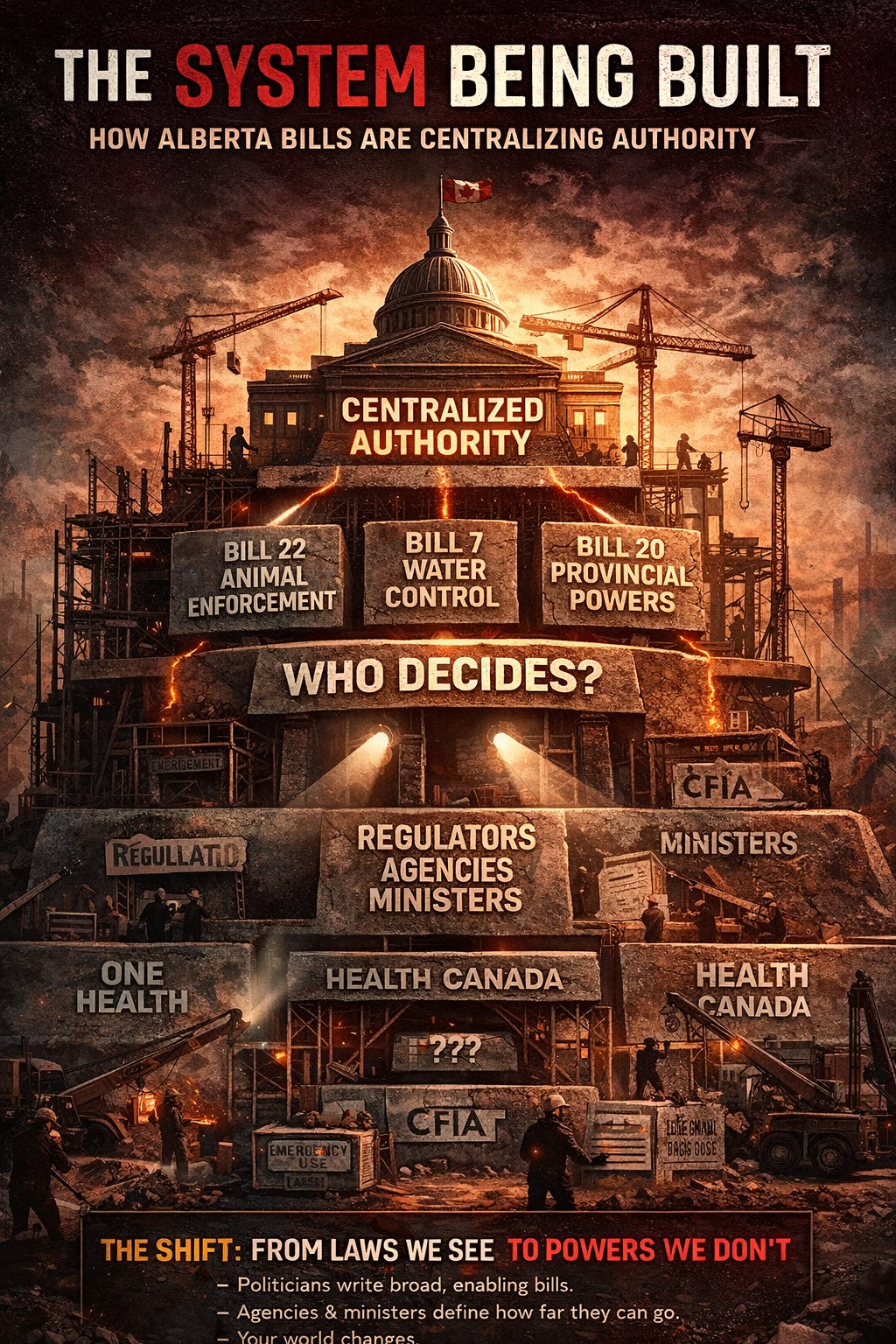
This is the WEF Agenda. Canada is now following the agenda of the WEF, where you will own nothing and be happy! Trudeau and Carney are members.
Would love to reconnect and share a round table