
Canada’s Quiet Transformation:
How Agenda 2030 and the One Health Framework Are Being Implemented Without Public Awareness

An accessible overview for Canadians across the political spectrum
Most Canadians assume that our policies, whether on health, agriculture, climate, or food are designed and debated here at home, shaped by our elected officials, and held accountable through our democratic institutions.
But over the past decade, Canada has undergone a profound transformation that most citizens never voted on, never debated, and were never informed about.
Two global frameworks now guide the direction of our national, provincial and municipal policies:
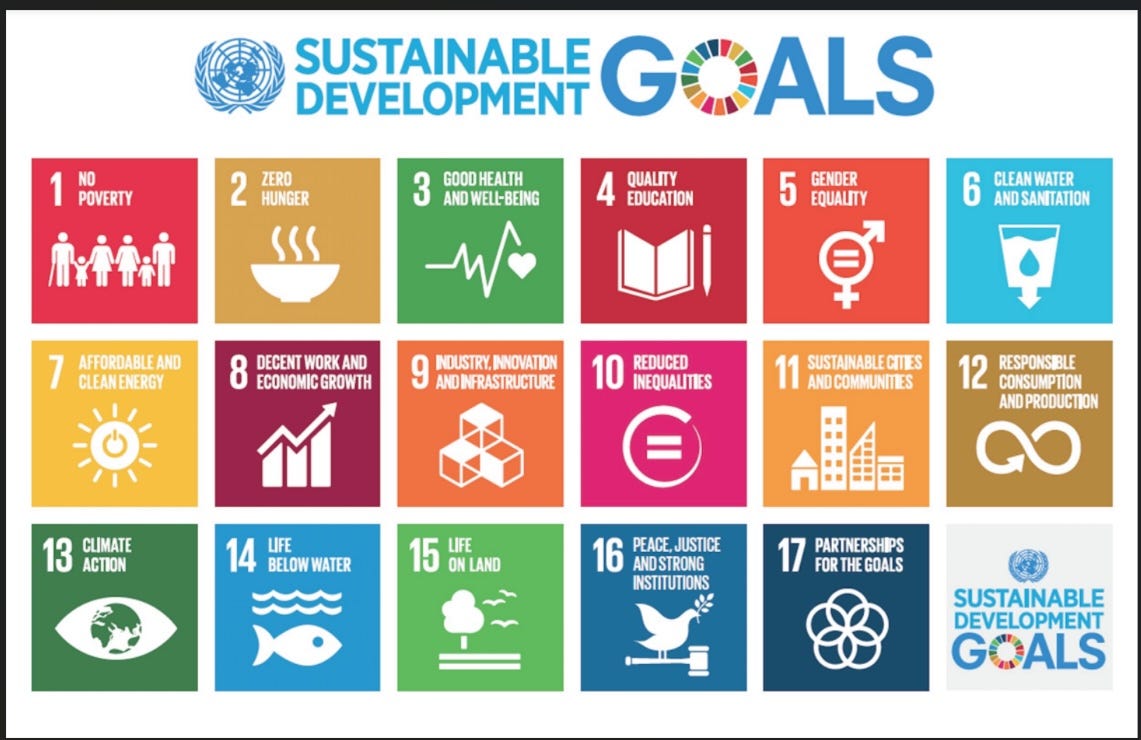
1. The United Nations’ Agenda 2030 (and its 17 Sustainable Development Goals, SDG’s).
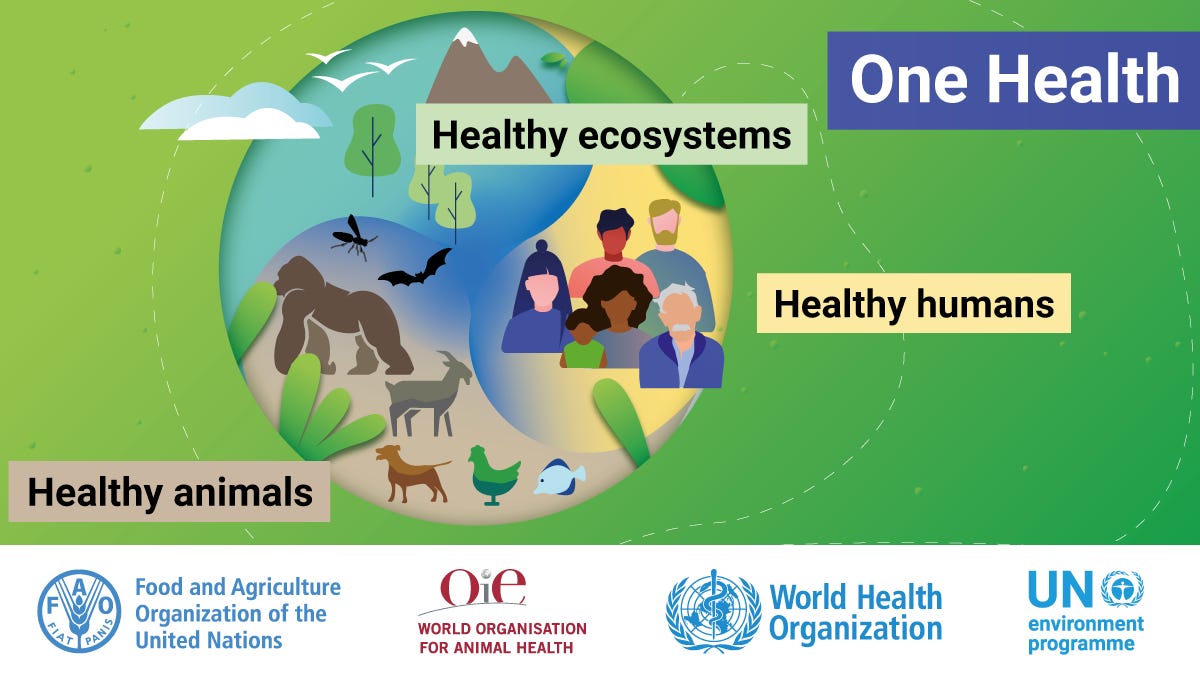
2. The WHO/UN/World Bank “One Health” Agenda
These are not fringe concepts.
They are not secret.
They are openly promoted by the UN, WHO, World Bank, G20, and WEF.
What is secret is how deeply they have been embedded into Canadian governance without democratic conversation or informed consent.
This article hopes to explain in clear, non-alarmist terms what these agendas are, why they matter, and how they are already shaping life in Canada.
PART 1. What Is Agenda 2030?
In 2015, Canada, along with 192 other UN member states, adopted Agenda 2030, a sweeping blueprint to “transform the world” through 17 Sustainable Development Goals (SDGs).
These goals include:
climate action
food system transformation
land and water regulation
energy transition
smart cities
digital identity systems
global partnerships with private corporations
biodiversity protections
poverty and inequality reduction
On the surface, these sound positive.
But Agenda 2030 is not simply a vision.
It is a directive, a set of targets that national governments are expected to meet, using:
new laws
new regulations
new economic models
new surveillance tools
new restrictions on industry, land use, and resource development
The key issue is not the goals themselves.
It is the lack of democratic debate, the lack of transparency, and the scope of the changes being made.
Agenda 2030 aims to restructure:
how we grow food
how we use land
how we heat our homes
how we travel
how we monitor emissions
how we manage farms
how we regulate wildlife
how our cities are designed
how economic activity is measured
Yet most Canadians have never heard of it.
THE LINGUIST’S TRANSLATION OF AGENDA 2030
What the UN says → What the language actually implies in practice
The UN’s Agenda 2030 uses euphemism, softened terminology, semantic fog, and moral framing to make sweeping structural changes sound compassionate or inevitable.
A linguist’s job is to strip away the emotional packaging and examine the functional meaning.
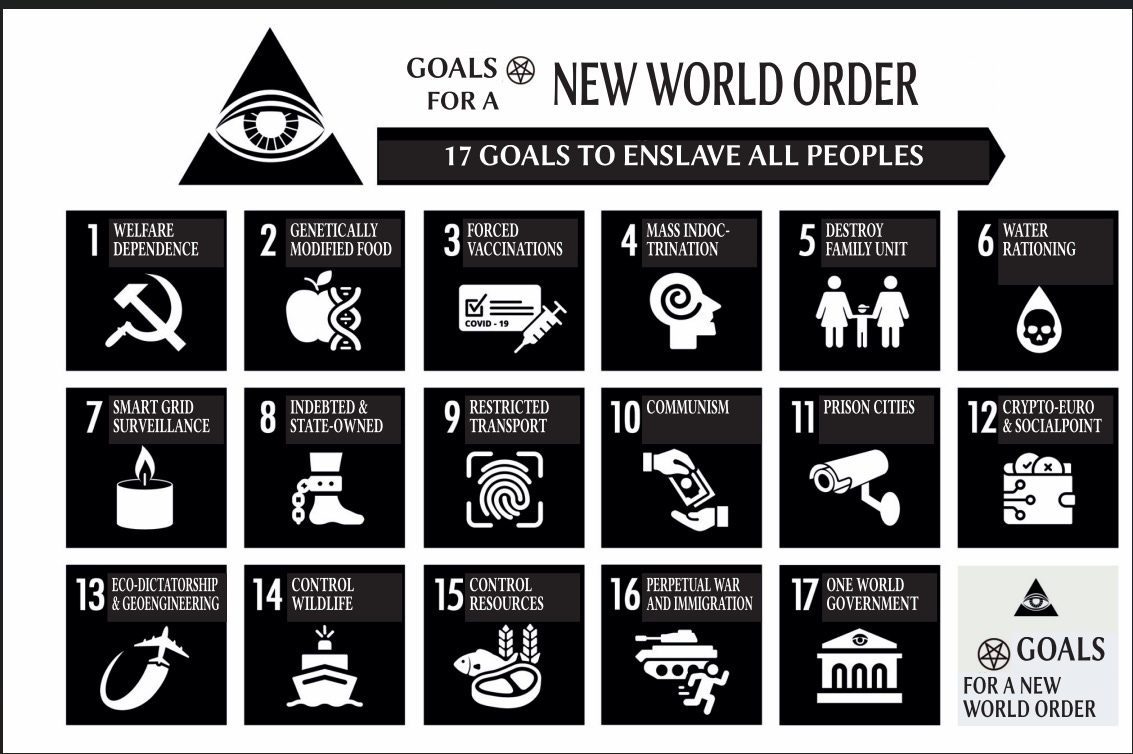
Below is each UN Sustainable Development Goal (SDG), translated into plain, operational English, contrasted with the real-world implications.
1. “No Poverty” → Population Dependency Systems
Linguistic reality:
“Eradicate poverty” is emotionally appealing, but linguistically vague.
It does not mean creating prosperity , it means eliminating private economic autonomy by expanding state or corporate dependence.
Decoded meaning:
Welfare expansion, universal dependency (universal basic income), reduction of private ownership, and state-controlled livelihoods.
2. “Zero Hunger” → Centralized, Engineered Food Systems
Linguistic tactic:
“Food security” is used instead of “food production control.”
Decoded meaning:
Genetically modified foods, corporate seed control, removal of local farmers, elimination of livestock, and global food governance.
3. “Good Health and Well-Being” → Medical Compliance Infrastructure
Linguistic tactic:
Health is framed as a universal right to justify universal surveillance and intervention.
Decoded meaning:
Mandatory vaccination systems, biometric health monitoring, pharmaceutical dominance, and loss of bodily autonomy, under One Health.
4. “Quality Education” → Ideological Standardization
Linguistic tactic:
“Quality” is undefined, so governments (or external bodies) define it.
Decoded meaning:
Curriculum harmonization, global ideological alignment, and mass social conditioning, especially in early childhood, when values are malleable.
5. “Gender Equality” → Family Structure Redesign
Linguistic tactic:
Language pushes “gender equity” but downplays the restructuring of the family unit.
Decoded meaning:
State involvement in family roles, erosion of parental authority, identity politicization, and ideological intervention in personal relationships.
6. “Clean Water and Sanitation” → Water Governance and Rationing
Linguistic tactic:
“Equitable access” is used instead of “restricted usage.”
Decoded meaning:
Water quotas, water property removal, and supranational control of freshwater distribution.
7. “Affordable and Clean Energy” → Energy Restrictions and Smart-Grid Control
Linguistic tactic:
“Affordable” and “clean” justify eliminating existing energy sources.
Decoded meaning:
Energy rationing, smart-meter surveillance, carbon quotas, and elimination of oil, gas, and personal heating choice.
8. “Decent Work and Economic Growth” → State/Corporate Labour Management
Linguistic tactic:
Uses positive words (“decent,” “inclusive”) to signal labour restructuring.
Decoded meaning:
Expansion of gig-economy precarity, state-dependence, ESG compliance, and economic servitude through debt and regulation.
9. “Industry, Innovation, Infrastructure” → Technocratic Governance
Linguistic tactic:
“Innovation” masks the enforcement of digital ID, surveillance tech, and AI regulation.
Decoded meaning:
Restricted transport, biometric checkpoints, digital infrastructure controlling physical movement.
10. “Reduced Inequalities” → Wealth Redistribution Through Control
Linguistic tactic:
Vague moral framing without clear mechanisms.
Decoded meaning:
Centralized financial systems, elimination of personal wealth, and quasi-communist control of income and assets.
11. “Sustainable Cities and Communities” → Smart/Prison Cities
Linguistic tactic:
“Smart,” “sustainable,” and “resilient” are used to mean digitally governed.
Decoded meaning:
Surveillance grids, geofenced movement zones, 15-minute city confinement, and digital regulation of behaviour.
12. “Responsible Consumption and Production” → Centralized Currency and Carbon Controls
Linguistic tactic:
“Responsible” is undefined , it means monitored.
Decoded meaning:
Programmable currency, social-credit points, restrictions on buying, selling, and travel.
13. “Climate Action” → Eco-Dictatorship Under Emergency Powers
Linguistic tactic:
“Action” becomes a justification for permanent states of emergency.
Decoded meaning:
Geoengineering, lockdown-style climate mandates, and seizure of energy and land under climate pretext.
14. “Life Below Water” → Ocean and Fishery Regulation
Linguistic tactic:
“Protection” means “control.”
Decoded meaning:
Seizing jurisdiction over fisheries, coastlines, and shipping, often through treaty mechanisms.
15. “Life on Land” → Wildlife and Resource Control
Linguistic tactic:
Again, “protection” = “governance.”
Decoded meaning:
Land-use restrictions, wildlife policy expansions (One Health), and limitations on farming, hunting, and rural living.
16. “Peace, Justice, and Strong Institutions” → Permanent War & Migration Flows
Linguistic tactic:
Words evoke utopia; implementation evokes surveillance.
Decoded meaning:
Global policing, judicial centralization, engineered migration, and elimination of national sovereignty.
17. “Partnerships for the Goals” → One World Governance
Linguistic tactic:
“Partnership” masks binding international governance.
Decoded meaning:
Public-private cooperatives (corporate governance), global treaties, and top-down international rule.
LINGUISTIC SUMMARY
Agenda 2030 uses loaded language designed to:
evoke emotion
avoid specifics
sound benevolent
disarm criticism
hide coercive structures
This is classic soft-power language engineering.
Every term is a semantic container:
beautiful on the outside, bureaucratic and authoritarian on the inside.
The 17 SDGs are framed as humanitarian goals, but the operational language, when decoded, consistently aligns with:
centralized authority
restricted freedom
digitized surveillance
corporate governance
loss of national sovereignty
restructuring of family, economy, and land use
This is why linguists, historians, and political theorists refer to Agenda 2030 as the most ambitious global power consolidation project in modern history.
PART II: What Is One Health?
One Health is a global policy framework led by four powerful institutions:
World Health Organization (WHO)
Food and Agriculture Organization (FAO)
World Organisation for Animal Health (WOAH)
United Nations Environment Programme (UNEP)
The premise is simple:
Human health, animal health, and environmental health are inseparable and must be governed as a single system.
But the implications are enormous.
Under One Health, public health authorities gain influence over:
agriculture and farming
wildlife management
land use
climate and emissions
water systems
food production
livestock testing and surveillance
emergency powers
movement controls
zoonotic disease policy
One Health expands public health beyond hospitals and vaccines into every aspect of daily life, by declaring:
“Anything that affects animals, climate, or ecosystems can affect human health.”
This effectively gives health bureaucracies … often aligned with international institutions, jurisdiction over:
farms
forests
private property
livestock
even your pets
wilderness and water systems
rural communities
food sovereignty
This is not theory.
It is already happening.
Agenda 2030 gives the framework.
One Health gives the enforcement mechanism.
Without One Health, Agenda 2030 is just a list of goals.
With One Health, Agenda 2030 becomes a global system of control.
PART III: How These Agendas Were Inserted into Canada
1. Through federal commitments
Canada signed Agenda 2030 and integrated it into:
federal policy
budgets
climate plans
food system frameworks
immigration strategies
international agreements
The implementation strategy is publicly available, but rarely discussed.
2. Through provincial legislation
Provinces are rewriting:
emergency management acts
wildlife acts
land-use regulations
agriculture standards
climate policies
Many of these laws embed UN or One Health language directly into their purpose clauses.
3. Through public health expansion
COVID-19 established the precedent that public health orders can override:
mobility
private business
religious gatherings
schooling
medical privacy
personal choice
One Health expands these powers into agriculture and environment.
4. Through municipal governments
All municipalities in Canada received a Municipal Primer on the United Nations Conference on Environment and Development (UNCED) in 1994.
Nearly every major city has now adopted UN-aligned frameworks:

ICLEI
Smart Cities
C40 Cities
15-minute city models
climate emergency declarations
biodiversity and urban planning policies
These commitments are not debated by the public.
5. Through private–public partnerships
The UN’s own documents state clearly that corporations are partners in implementing Agenda 2030.
This shifts power away from voters and toward:
multinational companies
global financial institutions
international NGOs
foundations
philanthropic networks
It is governance without accountability.
PART IV: Why Canadians Should Care
This is not about ideology.
It is about democratic legitimacy, transparency, and consent.
Most Canadians do not know that:
international bodies are shaping domestic policy
food systems may be restructured without debate
farming is being regulated by global disease models
land use is being restricted under climate targets
public health now extends into agriculture and wildlife
emergency powers can be triggered by environmental factors
surveillance networks are being expanded under “biosecurity”
These are radical changes to:
how we live
how we work
how we farm
how we eat
how we govern ourselves
They require public conversation, not silent implementation.
PART V: Even If The Goals Were As Stated, The Real Issue Is Not the Goals, It’s the Method
Many of the stated goals; cleaner water, healthier ecosystems, thriving communities are shared by all sides.
The issue is how these goals are being implemented:
with minimal public awareness
without parliamentary debate
without referendums
through bureaucratic regulation
through emergency powers
through international obligations
through multi-agency coordination
through digital monitoring systems
Canadians are not being asked.
They are being managed.
Agenda 2030 is aspirational. One Health is operational.
Agenda 2030 is built around:
declarations
goals
targets
metrics
monitoring frameworks
It sets what they want:
food system transformation
climate control
digital identity
land management
population movement control
public-private partnerships
surveillance
global governance
…but it does not give governments the legal powers to force any of it.
One Health does!!!
ONE HEALTH is the legal doorway to override rights and sovereignty
The key phrase in all One Health documents:
“Human, animal, and environmental health are inseparable.”
Under this single statement, they can justify:
farm seizures
animal culls
land restrictions
business shutdowns
quarantines
forced testing
movement bans
digital tracking
emergency powers
lockdowns
climate restrictions
centralized food control
surveillance of farms, homes, animals, water, and soil
All under the excuse:
“It’s a biosecurity risk.”
Agenda 2030 cannot legally justify that.
One Health can.
Agenda 2030 tells countries WHAT to transform.
One Health tells them HOW to execute it.
For example:
Agenda 2030 Goal 2 (Food Systems):
“Transform food production to sustainable systems.”
Sounds harmless.
One Health execution tool:
“Animals may be reservoirs of zoonotic disease. Culling may be required.”
→ Suddenly, shutting down farms is not a policy choice,
it is a “public health emergency.”
This is how they bypass democratic process.
One Health allows global agencies to bypass national governments
This is the real reason they built it.
WHO, FAO, UNEP, WOAH, and the World Bank all have One Health authority.
And under the new Pandemic Treaty & IHR amendments:
WHO gains unilateral powers to declare health emergencies
that legally bind countries without their consent.
One Health expands the scope of what counts as an emergency to include:
wildlife
livestock
ecosystems
water
climate
land use
pollution
agriculture
food systems
Meaning WHO can claim jurisdiction over:
farms
forests
cities
wildlife zones
meat production
emissions
migration corridors
And call it a “health response.”
One Health collapses all sectors into one governance system
This is critical.
Agenda 2030 divides the world into 17 SDGs:
climate
food
water
energy
environment
poverty
inequality
land
health
cities
institutions
But this is still siloed.
One Health merges all sectors:
agriculture
food
wildlife
human health
environment
land use
climate
energy
transportation
Into one single enforcement system.
This is the first time in history that:
veterinarians,
health officers,
environmental agencies,
climate officers,
and police
all share the same powers under one umbrella.
One Health gives them jurisdiction over YOUR BODY.
Agenda 2030 has no legal authority over:
your bodily autonomy
your medical decisions
your DNA
your immune system
your movement
One Health does.
By linking human health to animals, land, food, water, climate, and air, they can claim:
“Your choices are a public risk.”
And once you are defined as a risk:
rights disappear
autonomy dissolves
consent becomes irrelevant
This was the entire blueprint behind COVID.
Canadians Deserve Transparency and Choice
Yet we are now:
adopting international frameworks
aligning domestic law with global directives
restructuring our food and health systems
expanding surveillance and emergency powers
transforming our economy and agriculture
reshaping local governance
…without open disclosure or genuine consent from the people.
This is not how democracy operates.
This is governance by quiet transformation, not public deliberation.
Canadians, regardless of political background, deserve:
full transparency
open debate
informed consent
the right to question
the right to choose how their country is governed
The first step is awareness.
The second step is conversation.
The third step is accountability.
Everyone is talking but no one is listening.
The reason we cannot get our message out to the general public is because each of us works alone with no numbers, no resources, no reach and no muscle. In Canada, there are thousands of us and we compete against each other, each trying to get our own voice heard over the noise of all of us talking at the same time. The effect is we drown each other out and none of our voices are heard.
Everyone is talking but no one is listening.
We...must...unite. But, we are not united and we are not uniting. If we can't or don't unite then we lose this global war.
Ian Bell
www.virusfraud.org
I cannot fathom how human beings who have children and grandchildren could possibly even think of doing this to their own flesh & blood.
Surely these people are possessed or terribly broken because no way on God's given earth could a well balanced individual inflict this dark and doomed future upon their offspring.
Even if our governments didn't come up with these evil ideas and are simply under instruction, they must know that by doing the bidding of these psychopathic monsters it doesn't exempt them from being seen by us and judged by God as being just as evil.